Hello and welcome to Current, the newsletter that helps you navigate this new era of electricity. I’m your newsletter host, Catherine Morehouse Gernes.
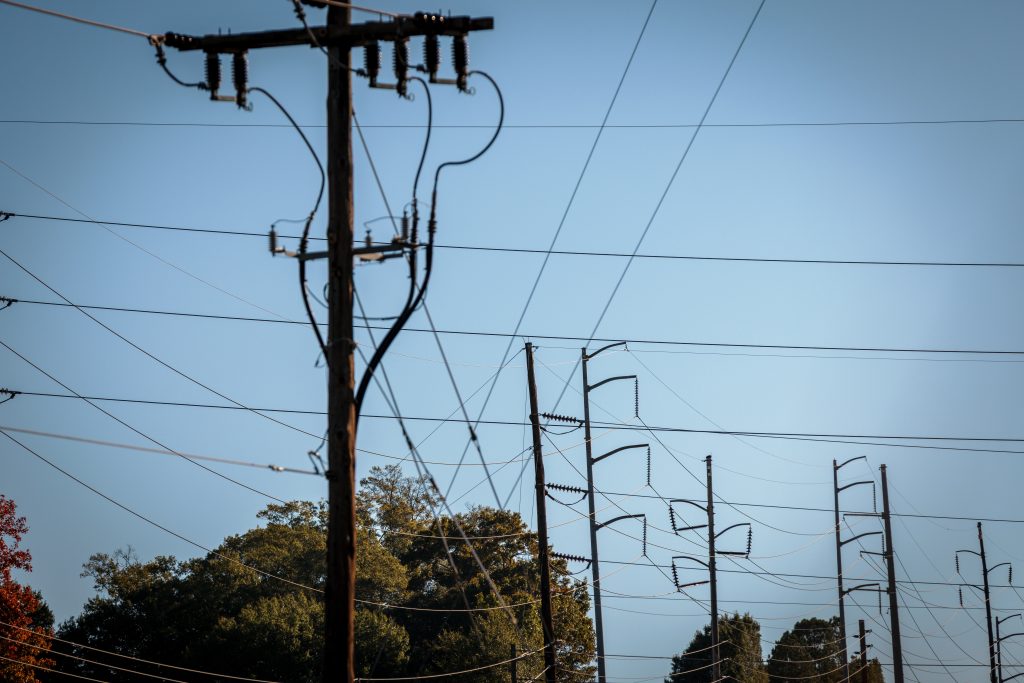
Image of the Week
Infrastructure investments needed to serve large-load customers made up the bulk of new CapEx announcements in Q3.
Dustin Chambers for PowerLines in Tucker, Georgia.
Hot Topic: Utilities Talk Affordability in Q3 but Add $196 Billion to Spending Plans
One big thing to put on your radar
Despite growing affordability concerns, utilities aren’t planning on slowing down their spending anytime soon, according to a PowerLines’ analysis of Q3 utility earnings transcripts.
Nearly every utility company mentioned affordability in their Q3 earnings calls. They also defended their approach to growing data center demand—including efforts to ensure large load customers are shouldering the costs of new infrastructure built to serve them—following the midterm elections turnover, which saw a surge in winning candidates who ran in part on growing cost concerns. But the majority of U.S. power companies also detailed new plans to ramp up spending, representing a potential new wave of costs that could hit consumers’ wallets in the coming years.
According to a PowerLines analysis of Q3 earnings transcripts, at least 20 utilities announced immediate or upcoming adjustments to their CapEx plans, indicating at least $853 billion in utility CapEx mentioned in Q3 earnings alone over the next three to seven years—a $195.8 billion increase over those 20 utilities’ previously announced utility spending plans.
The planned increase in spending joins an estimated $1.4 trillion in total CapEx utilities plan to spend through 2030, according to a previous PowerLines report. PowerLines will release an official updated tally of proposed utility CapEx spending in early 2027.
At least 14 utilities cited new infrastructure needed to meet demand from new large-load customers or general consumer growth as key drivers of their CapEx plans.
To break it down further:
- Twelve utilities announced nearly $460 billion in planned CapEx in Q3 earnings calls alone—representing a $70.8 billion increase over previously announced plans.
- Another eight utilities teased upcoming CapEx updates coming in Q4, representing at least $393 billion in total CapEx—a more than $125 billion boost over previous spending plans.
But utilities’ spending plans may be tested by a new wave of gubernatorial and PUC officials, many of whom pledged on the campaign trail to ensure that utility spending on infrastructure needed to meet large customers’ needs is not passed on to everyday consumers.
New and Notable
A roundup of other relevant energy developments
In Wisconsin: In a decision the state’s Citizens Utility Board called “unprecedented,” the Public Service Commission of Wisconsin cut a proposed $449 million rate increase for state utility We Energies, a subsidiary of WEC Energy Group.
The move reduced how much We Energies could raise rates—from 4.6 percent and 4.5 percent in 2027 and 2028, respectively, to 3.9 and 3.5 percent over that time period—while also reducing company profits, and ensuring shareholders pay for board fees rather than consumers. The commission also cut the amount utility customers pay for closed-down power plants, reduced the amount of profit We Energies can earn on a plant scheduled for closure, and prevented the utility from earning a return on cost overruns related to an ongoing generation project.
Wisconsin CUB estimates the decision could save consumers close to $80 million over the next two years.
New Playbook for State Legislators: PowerLines released a new playbook to guide new and incumbent state legislators on how they can leverage their authorities to lower consumer energy bills while growing the economy. The playbook provides tools across three key areas:
- Policy: Modernize the underlying rules and incentives that govern the utility system.
- Personnel: Use the state budget, confirmations process, and committee hearings to ensure the state’s public utilities commission is providing proactive, robust oversight.
- Platform: Leverage the bully pulpit to advocate for consumers and weigh in on state, regional, and federal decisions that impact utility costs.
Docket Corner
New utility proceedings to keep an eye on
We update our docket search monthly. Check out our last roundup here and check back next issue for an update!
Job Board
A snapshot of the latest PUC job postings
For a full list of job openings at commissions across the country, check out our full PUC Jobs Board.
- Energy Siting Intern — Massachusetts Department of Public Utilities
- Chief Information Officer — Washington Utilities and Transportation Commission
- Deputy Director — Missouri Public Service Commission
- Senior Ratepayer Assistance Specialist — State of Maine
- Deputy Chief of Staff — New York Department of Public Service
News You Can Use
- Where Rising Electricity Prices Showed Up in the Blue Wave — Heatmap News
- Exclusive: Dems’ “Project 2029” targets utility monopolies — Axios
- Advocates push for new Democratic Legislature to address utility profits, data center regulation — Wisconsin Public Radio
- Energy costs among top issues for battleground voters, polling finds — Michigan Advance
- DTE, Consumers sue to block ‘money out of politics’ proposal approved by voters — Bridge Michigan
- Anger About Rising Electricity Bills Might Derail World’s Largest Utility Merger — The New York Times
- Dominion seeks another rate hike as lawmakers hold energy town hall — CBS 6 News WTVR Richmond
- New Jersey proposes program to pay residents, businesses for reducing electricity use during peak demand — WRNJ
Have a question for one of our experts? Any suggested topics you’d like to see us cover? Feel free to send us your utility bill, share your story, or ask us a question: current@powerlines.org.
Have a specific question or tip for me? Get in touch: catherine@powerlines.org.
PowerLines is a nonpartisan consumer education nonprofit organization that aims to modernize the utility regulatory system for American energy consumers to lower utility bills and grow the economy.